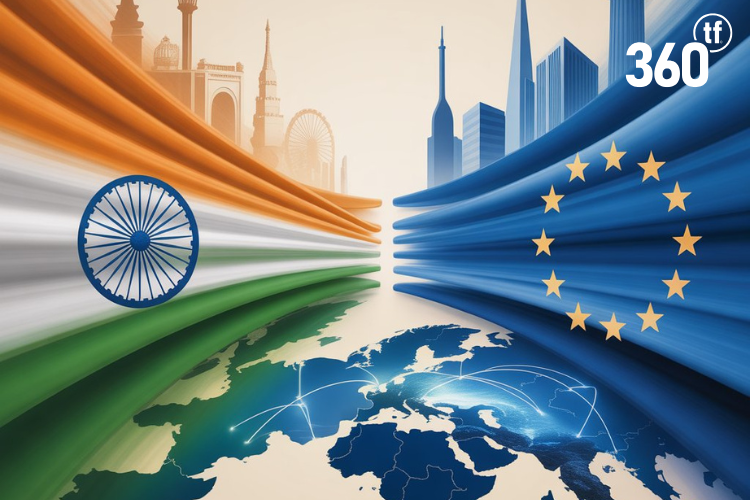
The India EU Free Trade Agreement has been officially concluded at the 16th India–EU Summit, marking a major milestone in India’s global trade engagement. The agreement strengthens economic ties between India and the European Union and establishes a future-ready framework for goods, services, mobility, and sustainable growth.
Together, India and the EU represent the fourth and second largest economies globally, accounting for nearly 25 percent of global GDP. The conclusion of this agreement reinforces a shared commitment to open markets, predictable trade rules, and inclusive economic development.
Unprecedented Market Access for Indian Exports
Primarily, the India-EU Free Trade Agreement grants preferential market access for over 99 per cent of Indian exports. Consequently, this development enhances India’s export competitiveness across various sectors.
Boost for Labour-Intensive Industries
Key labour-intensive sectors are set to benefit immediately. Tariffs of up to 10 percent on nearly USD 33 billion worth of exports will be reduced to zero once the agreement comes into force. These sectors include:
- Textiles and apparel
- Leather and footwear
- Marine products
- Gems and jewellery
- Engineering goods
- Automobiles
This tariff elimination will support MSMEs, artisans, women, and youth by integrating Indian manufacturers more deeply into global value chains.
Agriculture and Processed Food Exports Gain Momentum
Specifically, the agreement provides favourable market access for Indian agricultural and processed food products. Furthermore, India protects sensitive sectors including dairy, cereals, and poultry to protect domestic priorities.
Strong Commitments in Services and Mobility
Services trade forms a central pillar of the India EU Free Trade Agreement, with expanded and commercially meaningful commitments across sectors where India holds global strengths.
Market Access in Key Service Sectors
Indian service providers will gain predictable access across more than 140 EU subsectors, including:
- IT and IT-enabled services
- Professional and business services
- Education and research
- Financial services
- Tourism and construction
In return, EU service providers will access over 100 Indian subsectors, encouraging technology transfer and investment.
Future-Ready Mobility Framework
Initially, the agreement introduces a facilitative mobility framework covering business visitors, intra-corporate transferees, contractual service suppliers, and independent professionals. Furthermore, it supports student mobility and post-study work opportunities. Additionally, it also supports constructive engagement on social security arrangements.
Addressing Non-Tariff Barriers and Sustainability
Furthermore, the agreement reduces non-tariff barriers beyond tariff liberalisation. Specifically, it improves customs procedures, regulatory cooperation, and streamlined sanitary standards.
Forward-Looking CBAM Provisions
Additionally, the India-EU Free Trade Agreement includes provisions to support constructive engagement on the Carbon Border Adjustment Mechanism. Consequently, these cover technical cooperation, recognition of carbon pricing mechanisms, and targeted support to help Indian exporters.
Strategic Impact on Global Trade
Furthermore, the agreement strengthens cooperation in digital trade, artificial intelligence, and clean technologies. Additionally, it reinforces intellectual property protections while recognising India’s Traditional Knowledge Digital Library.
With the EU becoming India’s 22nd FTA partner, this agreement, along with recent trade deals with the UK and EFTA, effectively opens the European market for Indian exporters and service providers. The India EU Free Trade Agreement lays a strong foundation for inclusive, resilient, and future-ready growth aligned with India’s long-term economic vision.