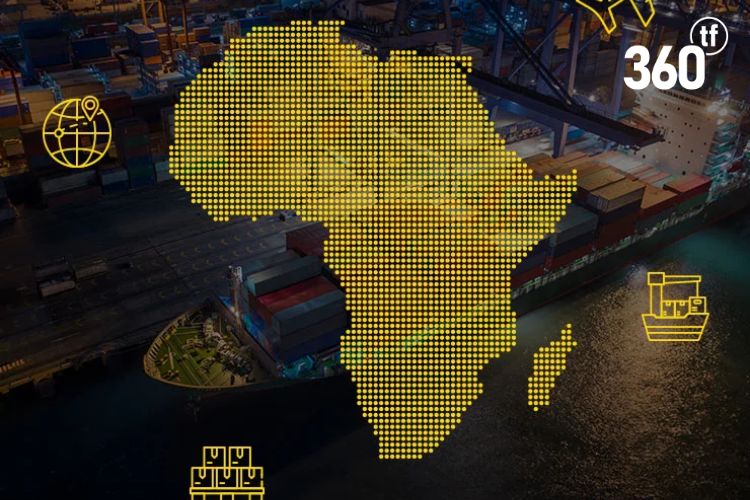
Trade serves as one of the most important drivers of economic growth. However, Africa as a continent is still not entirely capturing the growth-enhancing benefits of international commerce. Although its population has more than tripled over the last five decades to account for around 17% of the world’s population, Africa’s share of global trade has decreased steadily over the same period, from 4.4% to just 3%.
Trade Finance plays a vital role in this global growth. Currently, the deficit of trade finance is a persistent issue that the pandemic is likely to aggravate. Regulatory challenges have emerged as a significant drag on the African trade finance gap. Specifically, 15% of banks list these challenges as the main constraint to expanding the trade finance supply.
Understanding the Scale of the African Trade Finance Gap
Though the unmet demand in trade finance declined significantly from its peak of $120 billion in 2011 to $81 billion in 2019, the deficit remains stark. The global trade finance gap was estimated at $1.5 trillion in 2018, meaning the average unmet demand in Africa represents 5.5% of the total global gap.
The response from key players, including Development Financial Institutions (DFIs), contributed to the recent decline in the African trade finance gap. DFIs increasingly play an active role by providing facilities for short-term lending and credit guarantees aimed at SMEs. On average, 60% of banks in Africa that engage in trade finance receive some form of DFI support. However, despite this support, the participation rate continues to fall-dropping to 71% in 2019 compared to 87% in 2018.
Characterisation of Trade Assets within the African Trade Finance Gap
Roughly 60% of trade finance assets held by banks are unfunded transactions, such as letters of credit (LCs). In the previous decade, these assets accounted for 14% of total bank assets in Africa. Crucially, all LCs issued by African banks require confirmation from large global banks.
As global banks “de-risk” and pull out of markets they perceive as too risky, they leave many African-based banks unable to conduct trade in foreign currency. Based on SWIFT data analysis, the number of correspondent banking relationships involving US Dollar transactions decreased by about 25% between 2011 and 2017. This “de-risking” phase is a primary driver of the African trade finance gap, as it reduces the confirmation lines available to African banks.
Bridging the African Trade Finance Gap via Digitisation and 360tf
To fill this gap, especially regarding LC confirmation requirements for the 400+ African banks, digital platforms are emerging. One such endeavour is 360tf, a Singapore-based Digital Trade Finance platform. 360tf brings the trading world closer by connecting importers and exporters with a global confirming bank to fulfil their LC and financing requirements. On the 360tf platform, LCs are confirmed by reputed banks in large financial centres, which provides essential risk mitigation for all parties.
In addition to 360tf, the ICC launched ICC Trade Now to tackle the global gap. This suite of digital products includes ICC TRADECOMM, Trade Flow Capital, and FQX. These solutions allow SMEs to select providers aligned with their needs while enabling financiers to service SMEs profitably. The 360tf LinkedIn page also has a lot of useful information related to trade finance. Do check it out!
SME Rejections and the Future of the African Trade Finance Gap
African trade is significantly underserved. Between 2011 and 2019, banks intermediated only about 40% of total African trade, compared to the global average of 80%. While Intra-African trade receives a fair share of intermediated finance (18%), the contribution of trade finance to bank earnings has decreased from 17% to 10%. This decline is due to higher processing fees and additional KYC and AML requirements.
Furthermore, while default rates by African banks are lower than overall NPLs, the SME trade finance application rejection rate increased by 20% between 2013 and 2019. Addressing the African trade finance gap requires a concerted effort to:
- Raise awareness of the challenges imposed by new KYC/AML requirements.
- Support local banks that participate in trade finance.
- Leverage the AfCFTA to eliminate barriers and create a unified regional market.
Ultimately, once the global health crisis recedes, the need for financing to reenergise regional trade will be more urgent than ever. Concrete steps to reduce the African trade finance gap must remain a top priority for international and national regulators alike.