
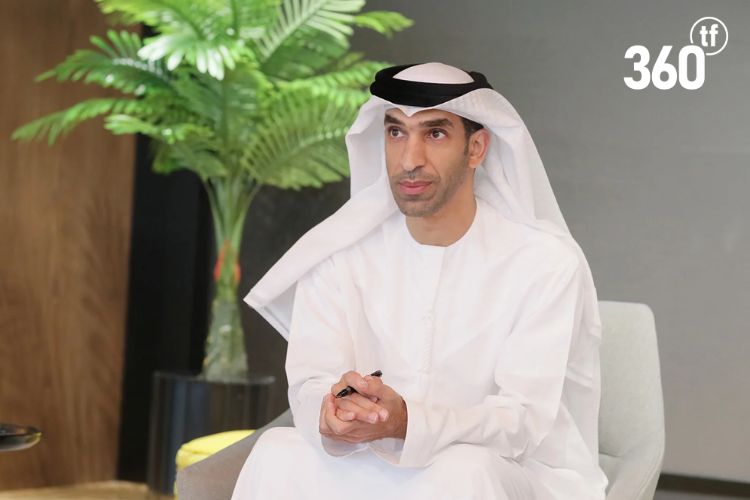
The UAE government is preparing to launch a new UAE services export strategy to help the service sector benefit from expanding global trade relationships. Dr Thani Al Zeyoudi, Minister of State for Foreign Trade, announced that this initiative will develop in close partnership with the private sector. Furthermore, the strategy aims to leverage the success of the Comprehensive Economic Partnership Agreements (CEPA) programme. Consequently, this move will enhance the competitiveness of local firms and promote substantial growth in services exports.
Expanding the Contribution of Services to Foreign Trade
Services exports currently represent a flourishing segment of the global trading system. In the UAE, these exports have increased four times faster than the global average over the last eight years. Currently, nearly 20 per cent of the UAE’s overall foreign trade consists of services, which equates to $250 billion. Because the nation is on track to hit Dh4 trillion in foreign trade by 2031, this UAE services export strategy remains a critical pillar of economic diversification.
Nine Key Industry Verticals for Growth
The government has identified nine specific industry verticals where the UAE possesses proven capabilities. These sectors will form the core of the new UAE services export strategy:
- Travel and Tourism
- ICT (Information and Communications Technology)
- Professional Services
- Financial Services and Islamic Finance
- Education and Medical Tourism
- Creative Economy and Logistics
By focusing on these areas, the UAE intends to take a larger share of the global services market, which reached $7.2 trillion in 2022.
Private-Public Taskforces and Data Excellence
To ensure success, the government is establishing dedicated taskforces for each sector. These collaborations will involve industry leaders who will create sector-specific roadmaps and identify new markets. In addition, the Federal Competitiveness and Statistics Centre (FCSC) will handle best-in-class data collection. This process aligns with World Trade Organisation (WTO) standards to ensure evidence-driven trade policies. Therefore, the UAE services export strategy uses high-quality data to meet shifting global demands effectively.
Alignment with National Strategic Objectives
This initiative fits perfectly within a broader, holistic approach to national trade. It complements the existing re-exports strategy and the NextGenFDI programme. Moreover, the focus on digitisation supports the transition toward a technology-led economy. As the host of the WTO’s MC13 in February 2024, the UAE continues to promote the message of positively disrupted trade. Thus, the country remains well-positioned to achieve its ambitious targets and solidify its status as a global service-based hub.
Courtesy: khaleejtimes.com